How to Choose the Right Moisture Meter
Choosing the best moisture meter depends primarily on the material you need to test and how the meter will be used. A woodworker checking lumber has different requirements from a flooring installer testing hardwood before installation, while a building inspector may need to investigate wood, drywall, masonry and other materials during the same visit.
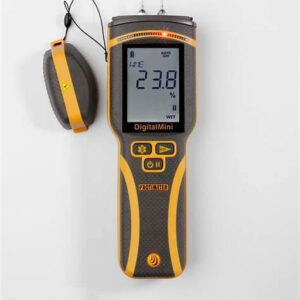
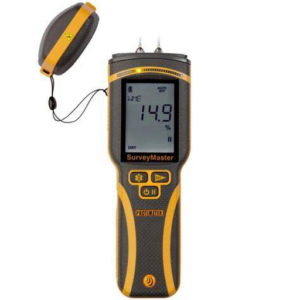
The first decision is usually whether you need a pin moisture meter, a pinless moisture meter or a meter that combines both technologies. You should also consider measurement depth, supported materials, moisture range, species adjustment for wood and whether you need additional features such as data logging, Bluetooth connectivity, temperature and humidity measurement or thermal imaging.
Pin vs Pinless Moisture Meters
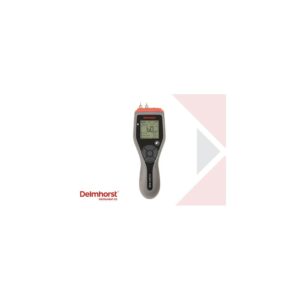
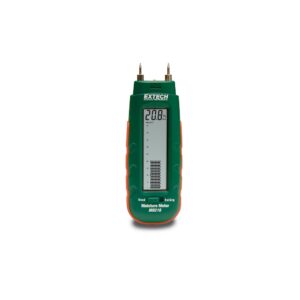
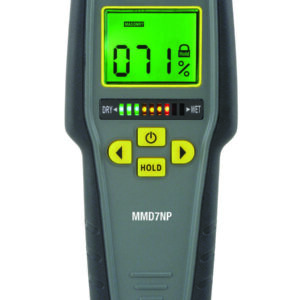
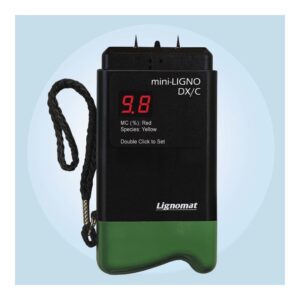
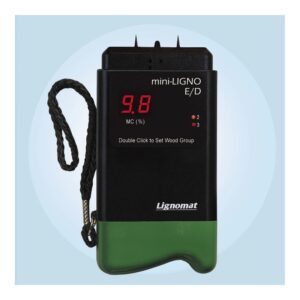
Pin moisture meters use two or more metal probes that penetrate the material being tested. The meter measures electrical resistance between the pins and converts that information into a moisture reading. Because the pins make direct contact inside the material, this method can be useful when you need to investigate a specific location or compare moisture at different depths using suitable probes.
The main disadvantage is that pin meters leave small holes in the tested surface. This may not matter when checking framing timber, unfinished lumber or hidden building materials, but it can be undesirable on finished hardwood floors, furniture or decorative surfaces.
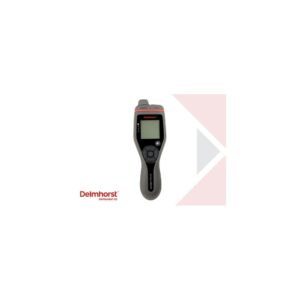
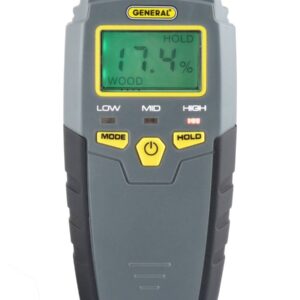
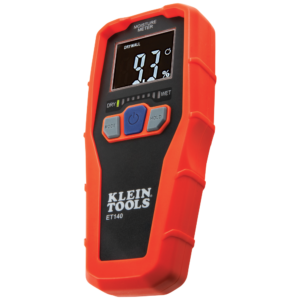
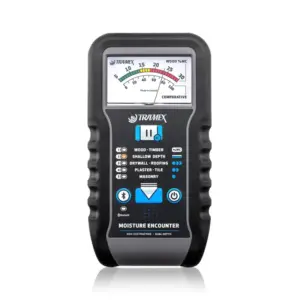
Pinless moisture meters use a flat sensor plate to scan the material without puncturing it. They are especially popular for hardwood flooring, woodworking and non-destructive building inspection because many readings can be taken quickly without leaving visible marks.
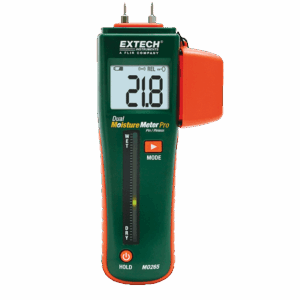
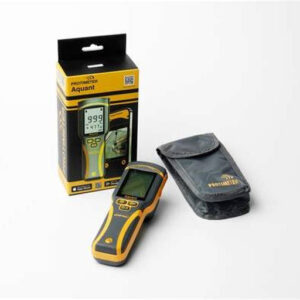
Some professional meters combine pin and pinless measurement. These models allow the user to scan a larger area non-destructively and then use pin measurements when a more targeted investigation is required.
Moisture Meters for Wood
A wood moisture meter is one of the most useful tools for flooring installers, carpenters, furniture makers and woodworkers. Wood naturally exchanges moisture with the surrounding environment, and its dimensions can change as moisture content rises or falls.
Testing lumber before machining, finishing or installation can help identify boards with significantly different moisture levels. For hardwood flooring, measurements can also be compared across multiple boards and with the conditions at the installation site before the flooring is installed.
When choosing a moisture meter for wood, look at the supported moisture-content range and whether the meter allows adjustment for different wood species or specific gravity. Professional pinless meters may also offer more than one measurement depth, which is useful when working with materials of different thicknesses.
Pinless Wood Moisture Meters
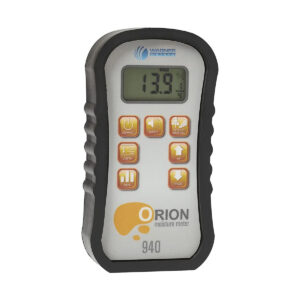
Pinless wood moisture meters are particularly convenient when the surface should remain undamaged. Instead of testing only one small point, the meter can be moved across boards to identify areas where readings differ from the surrounding material.
This makes pinless meters useful for hardwood flooring, lumber storage, woodworking shops and quality-control applications where many pieces of wood need to be checked efficiently.
Moisture Meters for Hardwood Flooring
Moisture measurement is an important part of professional hardwood flooring installation. Wood flooring and the subfloor can react differently to changes in moisture, and significant moisture differences may contribute to movement after installation.
A flooring moisture meter allows installers to take readings from multiple boards rather than relying on the condition of a single sample. Pinless meters are especially practical for finished flooring because they do not leave holes in the surface.
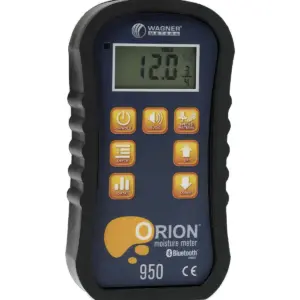
For more demanding jobs, professional meters may provide dual-depth measurement, onboard data storage, statistics or Bluetooth reporting. These features can make it easier to document readings across a larger flooring project.
Moisture readings should always be interpreted together with the flooring manufacturer's installation instructions and the conditions at the job site rather than being treated as a single universal pass-or-fail number.
Concrete Moisture Meters
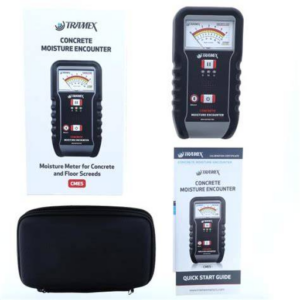
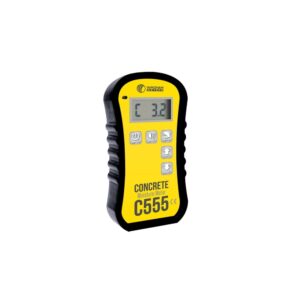
Concrete moisture meters are designed for a different task from conventional wood meters. They are commonly used by flooring installers, coating professionals and building inspectors to evaluate moisture conditions in concrete slabs and screeds.
Non-destructive concrete moisture meters can be used to take many readings across a floor quickly. This makes it easier to identify areas that are wetter or drier than the overall slab and determine where additional investigation may be necessary.
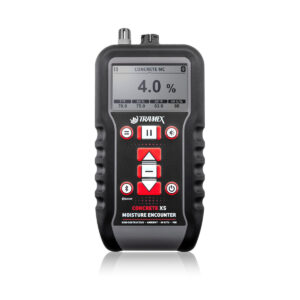
Professional concrete meters may include dedicated concrete moisture scales, comparative scales, environmental sensors and Bluetooth reporting. Some systems can also connect to optional probes for additional types of concrete testing.
It is important to understand that different concrete moisture test methods measure different conditions within the slab. A surface or near-surface moisture meter does not automatically replace an in-situ relative humidity test when a flooring, adhesive or coating specification requires one. Always follow the test method required for the particular installation.
Moisture Meters for Building Inspection
Building inspectors and restoration professionals often need a moisture meter that works across more than one material. Walls, floors and ceilings may include wood, drywall, plaster, masonry, concrete and other materials, so a general building moisture meter can be more practical than a tool designed only for lumber.
Pinless scanning is useful for quickly comparing large areas and locating unusual moisture patterns. Once a suspicious area is found, a combination meter with pin probes can provide an additional method of investigation.
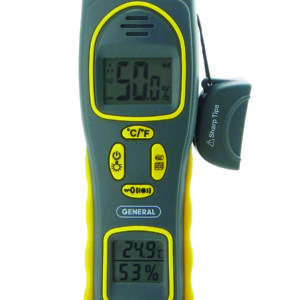
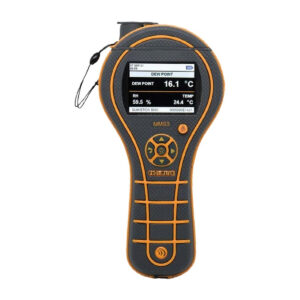
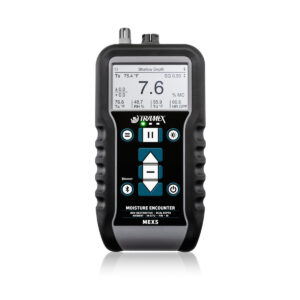
Some advanced moisture meters also measure relative humidity, air temperature, surface temperature and dew point. These readings can provide additional context when investigating condensation, water intrusion or drying conditions.
Moisture Meters for Water Damage and Restoration
After leaks, flooding or other water damage, moisture may remain inside walls, floors and other building assemblies even when the surface appears dry. Moisture meters allow restoration professionals to compare affected areas with known dry areas and monitor how conditions change during drying.
Non-invasive meters are useful for moisture mapping because they can scan many locations quickly. Pin meters can then be used where direct measurement is appropriate. Professional restoration meters may also store readings or connect to mobile apps, making it easier to document progress over multiple inspections.
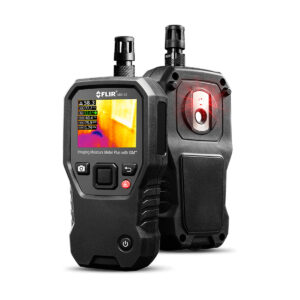
Thermal imaging moisture meters add another layer of information by showing temperature differences across a surface. Thermal images do not measure moisture directly, but they can help identify areas that deserve closer investigation with a moisture sensor.
Important Features to Compare
Not every moisture meter needs the same feature set. For occasional household use, a simple pin or pinless meter may be sufficient. Professional flooring installers, inspectors and restoration contractors may benefit from more advanced functions.
- Measurement type: pin, pinless or a combination of both.
- Supported materials: wood, drywall, concrete, masonry or general building materials.
- Measurement depth: especially important for pinless meters and layered flooring systems.
- Wood species adjustment: useful when accurate wood moisture measurements are required across different species.
- Data storage: helpful when many readings need to be collected across a project.
- Bluetooth connectivity: useful for moisture maps, reports and job documentation.
- Temperature and humidity: provides environmental information alongside material moisture readings.
- Field calibration: available on some professional meters for checking instrument performance on site.
Professional vs Basic Moisture Meters
Basic moisture meters can be an excellent choice for homeowners and occasional users who simply need to determine whether an area is unusually wet or to check lumber before a small project. They are inexpensive, easy to use and often provide enough information for basic moisture checks.
Professional moisture meters are designed for users who depend on moisture readings as part of their work. Higher-end models may offer improved material adjustment, multiple measurement depths, data logging, environmental sensing, Bluetooth reporting, interchangeable probes or thermal imaging.
The most expensive meter is not automatically the best choice. A flooring installer working primarily with hardwood may benefit more from a specialized pinless wood moisture meter, while a building inspector who regularly investigates leaks and water damage may get more value from a multi-function pin and pinless system.
Find the Best Moisture Meter for Your Application
There is no single moisture meter that is ideal for every material and every job. Start by identifying what you need to measure, whether surface damage from pins is acceptable and how much documentation your work requires.
Use the filters above to compare pin, pinless and combination moisture meters for wood, concrete, drywall, flooring installation, woodworking, building inspection and water-damage restoration. Each product page includes key specifications, advantages, limitations and our editorial assessment to help you narrow down the most suitable meter for your needs.