How to Choose the Right Laser Level for Flooring and Installation Work
A laser level can make flooring layout, tile installation and general interior alignment considerably faster and more accurate. Instead of repeatedly measuring individual reference points, installers can project continuous horizontal and vertical lines across floors, walls and entire rooms.
The right model depends on the type of work you perform, the size of the space and how many reference planes you actually need. A compact cross-line laser may be more than enough for occasional interior work, while professional flooring installers and contractors can benefit from 360-degree and 3-plane laser levels that provide multiple reference lines from a single setup position.
Who Are Laser Levels Most Useful For?
Laser levels are useful anywhere accurate alignment, leveling or squaring is important. For flooring professionals, they can help establish reference lines before the first plank or tile is installed and reduce alignment errors that become increasingly visible across larger areas.
They are particularly useful for:
- Flooring installers laying out plank, tile and patterned floors.
- Tile setters who need consistent horizontal and vertical reference lines.
- Contractors and remodelers working across multiple walls, floors and rooms.
- Cabinet and interior installers who need accurate level and plumb references.
- DIY users who want a faster and more reliable alternative to repeated manual measurements.
For occasional small projects, a simple laser may be sufficient. Professionals who use the tool every day should usually place greater emphasis on accuracy, beam visibility, working range, mounting flexibility and jobsite durability.
Types of Laser Levels
Cross-Line Laser Levels
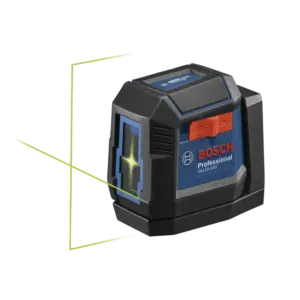
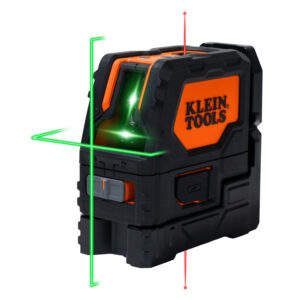
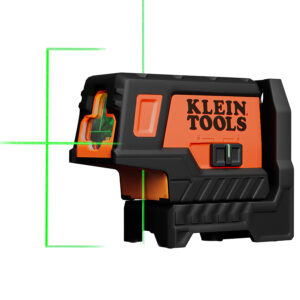
Cross-line models project a horizontal and vertical laser line that intersect to form a cross. They are compact, relatively easy to position and well suited to straightforward alignment tasks.
For flooring work, a cross-line laser can be useful for checking alignment with walls, establishing starting points and transferring reference lines to vertical surfaces. They are generally a good option for smaller rooms and users who do not need full 360-degree coverage.
360° Laser Levels
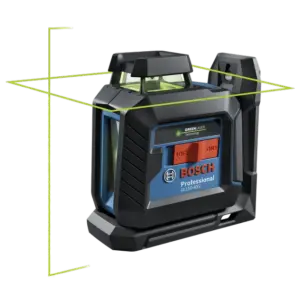
A 360-degree laser projects a continuous line around the room. This is particularly useful when several reference points need to remain at the same height or when an installer wants to work around a space without repeatedly repositioning the laser.
Some models combine a 360-degree horizontal plane with one standard vertical line. This can be a practical middle ground between a basic cross-line laser and a more complex professional 3-plane system.
3-Plane 360° Laser Levels
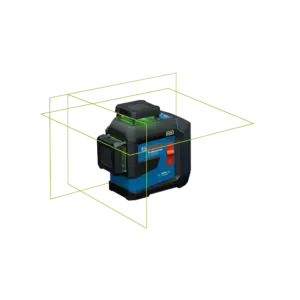
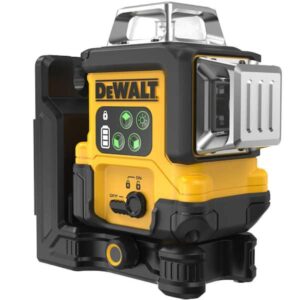
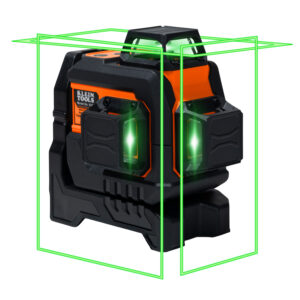
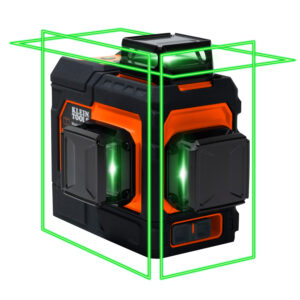
Professional 3-plane laser levels normally project one horizontal and two vertical 360-degree planes. Together, these reference lines can help establish level, plumb and square positions throughout a room from one setup point.
For large flooring layouts, patterned installations, tile work and projects that extend through multiple areas, this type of laser can significantly reduce repositioning and manual checking.
The trade-off is that 3-plane models are generally larger and more expensive. If you only need a horizontal and vertical reference in a small room, buying the most advanced 3-plane model may provide little practical benefit.
Green vs. Red Laser Beams
Beam visibility is one of the first differences users notice between laser levels. Green laser beams are generally easier for the human eye to see than red beams under comparable indoor conditions, which is why many professional tools now use green lasers.
For flooring installation, better beam visibility can be particularly useful across larger rooms or against surfaces where a weaker line is difficult to distinguish.
However, beam color should not be the only buying criterion. Accuracy, working range, runtime and the quality of the leveling mechanism are more important than choosing a tool simply because it uses a green beam.
Accuracy: One of the Most Important Specifications
Laser levels normally specify accuracy as a maximum deviation over a given distance. For example, two tools may look almost identical but have significantly different accuracy ratings at 30 or 33 feet.
For occasional household work, a small difference may not matter. For professional tile patterns, long flooring runs or installations where several rooms need to align, small errors can accumulate and become clearly visible.
When comparing models, check the manufacturer's stated accuracy rather than relying only on claims such as “professional” or “high precision.”
Consider the Working Range
The required range depends heavily on where the laser will be used. A compact model with a moderate visible range can work very well in bedrooms, kitchens and smaller interior spaces.
Larger commercial rooms and open construction areas may require considerably more reach. Some professional laser levels can also be used with a compatible laser detector, extending the practical working range beyond what the beam can be seen with the eye alone.
If most of your work is indoors and within relatively small rooms, paying extra for extreme detector-assisted range may not be necessary.
Do You Need Detector Compatibility?
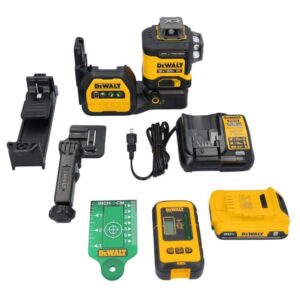
A laser detector, sometimes called a receiver, can identify the laser beam when it becomes difficult or impossible to see directly. This can be useful across long distances and in brighter working conditions.
Detector compatibility makes the most sense for contractors working in large commercial interiors, larger construction areas or situations where the laser is regularly used beyond its normal visible range.
For standard residential flooring installation, detector support can be a useful feature but is not always essential.
Power Source and Battery Runtime
Laser levels can use standard disposable batteries, internal rechargeable lithium-ion batteries or removable power-tool battery systems.
AA or Other Replaceable Batteries
Standard batteries are easy to replace and can be useful when access to charging is limited. Carrying a spare set can provide immediate backup power.
Built-In Rechargeable Batteries
USB or USB-C rechargeable models are convenient for regular indoor work and eliminate the need to continually purchase disposable batteries. Consider whether the laser can operate while charging and how long a complete charge takes.
Power-Tool Battery Platforms
Professional contractors may prefer models that use batteries from a power-tool ecosystem they already own. A removable battery can also be replaced immediately when it runs out, which is useful for long working days.
Mounting and Fine Adjustment Matter More Than They May Seem
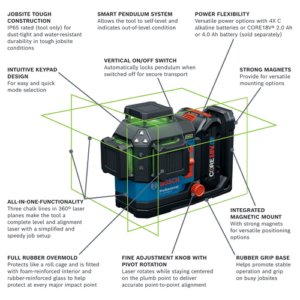
A laser is only useful if it can be positioned accurately. Magnetic brackets, tripod threads and fine-adjustment controls can have a significant impact on everyday usability.
A fine-adjustment mechanism is especially valuable when the laser line only needs to move a small distance. Without it, the installer may need to repeatedly move the entire laser or tripod and then check the alignment again.
Before buying, check whether the tool supports common tripod threads and whether the included bracket is suitable for the surfaces and working conditions you normally encounter.
Jobsite Protection and IP Ratings
Professional laser levels are regularly transported between jobs and exposed to dust, dirt, moisture and accidental impacts. An IP rating provides useful information about protection against dust and water.
A higher IP rating does not automatically make one laser better than another, but installers who regularly work in demanding construction environments should consider housing protection alongside accuracy and range.
For lighter interior use, extremely high protection may be less important than compact size, battery convenience and easy mounting.
Which Laser Level Is Best for Flooring Installation?
There is no single laser level that is best for every flooring project. The most appropriate choice depends on how the tool will actually be used.
- For occasional DIY and smaller rooms: a compact green cross-line laser is usually sufficient.
- For regular flooring and tile installation: a 360-degree horizontal laser or compact multi-plane system provides greater flexibility.
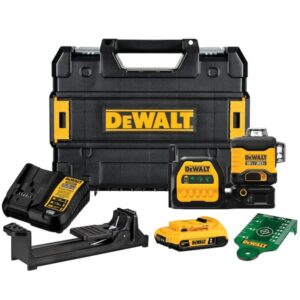
- For professional flooring contractors: a 3-plane 360° laser offers excellent versatility for layout, squaring and multi-room alignment.
- For larger spaces: look for longer range and detector compatibility.
- For frequent jobsite use: prioritize accuracy, durable construction, good mounting options and reliable battery runtime.
Compare Features, Not Just Price
Laser levels range from simple compact tools to advanced professional systems. The lowest-priced model may be perfectly adequate for occasional alignment work, while professional installers can often justify paying more for improved accuracy, greater coverage and faster setup.
When comparing laser levels, focus on the features that directly affect your work: laser configuration, accuracy, visible range, detector compatibility, power source, mounting options and environmental protection. Choosing the right combination of these features is usually more useful than simply buying the model with the longest specification list.